Aluminum vs Copper vs Steel Gutters: What Actually Determines Which One Lasts
Quick Answer: Aluminum, copper, and steel gutters all move water off a roof, but they hold up very differently once winter arrives. Aluminum resists rust and stays lightweight, though a thinner gauge can dent under heavy snow. Copper develops a protective patina and can outlast both other metals many times over, though it is heavy and soft enough to dent with less force. Galvanized steel handles impact well while its zinc coating is intact, then rusts once that coating wears through, especially in a wet, freeze-thaw climate. For most homes in the Wyoming Valley, gauge and installation quality end up mattering almost as much as the metal itself.
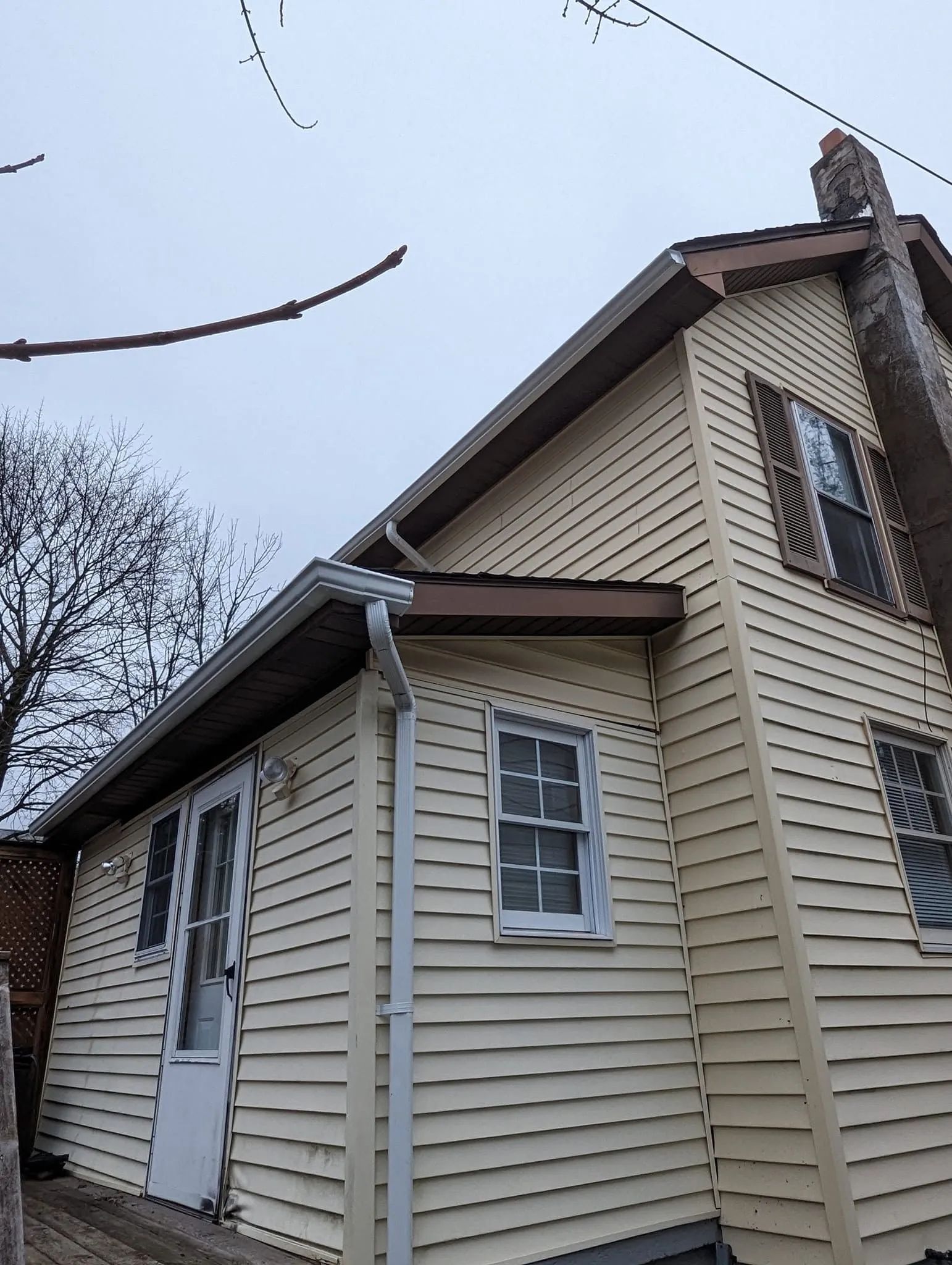
Walk a mixed block in Avoca or Duryea after an ice storm and the roofline tells three different stories. One house has gutters that shrugged off the load without a mark. The next has a run bowed slightly where a branch came down earlier in the season. A third, older home has a rust streak bleeding down the fascia where a steel gutter's zinc coating finally gave out. Same storm, same street, three different metals underneath the paint.
That is the real question behind aluminum vs copper vs steel gutters. It is not which metal is "best" in the abstract. It is which one holds up under the specific mix of wet snow, freeze-thaw swings, and heavy leaf load that defines a Northeastern Pennsylvania winter, and what tradeoffs come with each choice once the weather turns.
What Each Metal Actually Is
Aluminum
Rolled from coil stock into a continuous run fabricated to match the roofline, aluminum gutters are the material most homes in our region already have. Coil stock for gutters typically comes in two common thicknesses, .027 inch and .032 inch, and that gauge difference matters more than most homeowners realize.
Galvanized Steel
Steel gutters carry a zinc coating applied through galvanization, which protects the base metal from moisture until the coating wears down. Underneath a fresh coating, steel resists dents and impact better than aluminum. Once that protective layer thins out, though, the metal underneath is exposed to the same wet conditions that break down any bare metal.
Copper
Copper gutters run in two standard weights, 16 ounce and 20 ounce stock, with the heavier gauge offering meaningfully more resistance to denting and flexing. Bare copper starts bright and shiny, then oxidizes over a period of months to years into a brown, then blue green patina. That patina is not decay. It is a protective layer the metal forms on its own, and it is part of why copper systems can remain functional for generations.
Aluminum: Light, Rust-Resistant, and Gauge-Dependent
Aluminum does not rust the way ferrous metals do, because it forms a thin oxide layer on its surface rather than corroding the way iron based steel does when exposed to moisture. This resistance to rust, more than any other factor, is why aluminum has become the default gutter material for most homes built or fitted with new gutters in the last several decades. It is light enough that a full run does not stress fascia boards the way a heavier metal can, and it holds paint well over a long service life.
The tradeoff shows up under physical load. The thinner .027 inch stock flexes and dents more easily than .032 inch, which matters when a branch comes down or when several inches of wet snow settle on a roof edge and press down on the gutter beneath it. A .032 inch run holds its shape under that kind of pressure far better than the lighter gauge, which is one reason gauge, not just brand or color, deserves attention when a homeowner is comparing quotes for a new installation.
Aluminum also expands and contracts with temperature more than steel does across a wide swing, though within a range that a properly installed run, using expansion joints where needed on very long stretches, handles without issue. Where problems tend to show up is at the seams of an older sectional system, not in a continuous fabricated run.
TIP: If you are comparing aluminum gutter quotes, ask directly which gauge is being installed. A .032 inch aluminum run costs a little more to fabricate than .027 inch, but it holds its shape through a Northeastern Pennsylvania winter's snow load and branch strikes in a way the thinner stock cannot always match.
Galvanized Steel: Strength With an Expiration Date on the Coating
Steel's core advantage is basic physical strength. A galvanized steel gutter resists denting and holds its profile under impact better than aluminum, which is genuinely useful on a property with mature trees dropping branches or heavy ice buildup along the roofline.
The catch is what happens to that zinc coating over time. Galvanization protects the steel underneath as long as the coating stays intact, but the coating itself wears thinner with every freeze-thaw cycle, every scratch from a ladder or falling branch, and every season of standing water sitting in a clogged section. Once bare steel is exposed, rust starts, and it does not stop on its own. A steel gutter with visible rust spots is a metal already past the point where a simple repaint solves the underlying problem.
The failure timeline moves faster here than it would in a drier, milder climate. Our winters put steel gutters through repeated freezing and thawing, often with standing meltwater sitting against the metal for days at a stretch during a warm spell in January or February. Every one of those cycles works against a thinning zinc coating a little more.
Copper: The Metal That Ages Instead of Wearing Out
Copper behaves differently from the other two metals in a way that changes the entire comparison. Rather than resisting corrosion the way aluminum does or losing a protective coating the way steel does, copper forms its own long term protection as it ages. The patina that develops over copper gutters is a stable compound layer that actually becomes more protective over time, not less.
As a result, copper systems carry a service life that outpaces both aluminum and steel by a wide margin, often measured in generations rather than decades. Copper also does not react with cedar shakes, slate, or masonry the way some other metals can, which is part of why it shows up so often on homes with those roofing and exterior materials.
The tradeoffs are physical rather than chemical. Copper is heavier than aluminum, which means the fascia and hangers supporting it need to be in solid condition before installation, not marginal. It is also softer than steel, so while it resists corrosion better than either other metal, it can still dent from a determined branch strike or a poorly placed ladder.
How Wyoming Valley Winters Change the Comparison
Every material above behaves differently in a mild, dry climate than it does in ours. The Wyoming Valley runs through genuine four season swings, with wet, heavy snow through the winter months, repeated freezing and thawing rather than one long deep freeze, and a fall leaf load that piles debris into gutters right before the cold sets in.
Each of those conditions stresses the metals in a different way. Standing water and packed, wet snow add real weight to a run that was only ever built to move water through briefly. Aluminum's thinner gauge is where that weight shows up first, as a visible dent or slight bow along the run. Steel's zinc coating wears through faster under repeated freeze-thaw exposure than it would in a climate with a single cold season and a dry spring. Copper, meanwhile, tends to shrug off the freeze-thaw cycle almost entirely once its patina has formed, which is part of why older homes in the valley with copper gutters still original to the house are not unusual.
None of this means one metal is automatically wrong for our area. It means the maintenance expectations differ. A steel system needs more frequent inspection for coating wear and early rust here than it would somewhere with a shorter, drier winter. An aluminum system benefits from the heavier gauge given how much wet snow settles along a typical roofline between December and March.
WARNING: Do not mix copper gutters or copper flashing with aluminum components on the same drainage run without a barrier between them. Runoff carrying dissolved copper particles accelerates corrosion where it lands on aluminum, a reaction that shows up as pitting or premature failure in the aluminum section long before the rest of the system would normally need attention.
Weight, Fascia, and What the Structure Underneath Can Handle
The metal you choose does not exist in isolation. It hangs from fascia boards and hangers that have to support its full weight, plus whatever water, ice, and debris it is carrying at any given moment. Copper's added weight compared to aluminum means the fascia and hanger spacing supporting it need to be sound before installation, since a marginal fascia board that might tolerate a light aluminum run can fail under a heavier copper system loaded with wet snow.
This is also why a material decision on an older home sometimes starts with an inspection of the fascia and hanger condition rather than the gutter itself. A homeowner set on copper for its appearance and longevity needs to know whether the structure underneath can actually carry that weight for the decades a copper system is capable of lasting, not just for the first winter.
Choosing Between Them for Your Home
Roof pitch, tree cover, and how long you plan to stay in the home all factor into which of these three metals makes sense. A property with heavy tree cover and a lot of storm debris benefits from a metal that resists denting, which points toward steel or a heavier gauge aluminum, paired with a maintenance routine that catches coating wear early if steel is the choice. A homeowner planning to stay in a house for decades, with fascia in solid condition, is in the best position to get real value out of copper's long lifespan. Most homes in the valley end up well served by aluminum, particularly the heavier .032 inch gauge, given how it balances weight, rust resistance, and appearance against what a Northeastern Pennsylvania winter actually demands.
Good gutters only protect your foundation while they stay clear and properly aligned. A simple rhythm keeps them doing their job.
Every few months, clear leaves and debris from the troughs and check that downspouts run free. Twice a year, in late spring and again in fall, inspect for sagging sections, loose fasteners, and any spot where water stains hint at overflow. Before winter, make sure downspout extensions are still carrying water well away from the house, because a clogged or short downspout in freezing weather turns into an ice problem fast. Once a year, watch the gutters during a real rain and confirm water is flowing to the downspouts rather than spilling over the edge.
Frequently Asked Questions
Can copper gutters really outlast aluminum and steel by that much?
Yes, in material lifespan. Copper's self forming patina protects it in a way that doesn't wear out like a steel coating, so a properly installed system can remain functional for generations.
Do galvanized steel gutters rust faster in our climate than in milder regions?
The zinc coating wears down through repeated freeze-thaw cycles and standing moisture, both common through a Wyoming Valley winter, exposing bare steel to rust sooner than in a drier climate.
Why do most installers recommend aluminum over steel or copper for typical homes?
Aluminum balances rust resistance, light weight, and durability without the coating maintenance steel requires or the structural demands copper places on fascia and hangers, covering most typical situations well.
Does gutter gauge matter more than which metal is chosen?
Gauge and metal both matter, but within aluminum, the difference between .027 inch and .032 inch stock affects dent resistance and how well a run holds shape under snow load significantly.
Will aluminum gutters dent from falling ice or heavy snow?
Thinner .027 inch aluminum dents more easily under that load than .032 inch stock. A heavier gauge run resists wet, packed snow and falling ice better, worth specifying at installation.
Can copper and aluminum gutters be used on the same house?
They can be used on different sections, but shouldn't drain into or run alongside each other without a barrier, since copper runoff can accelerate corrosion on aluminum it contacts.
The Metal Beneath The Paint Decides Everything
Every gutter looks the same from the driveway once it's painted and hung, but what actually happens over a decade of Northeastern Pennsylvania winters depends entirely on the metal underneath. Aluminum trades some dent resistance for rust protection and light weight, steel trades a wearing zinc coating for real strength while it lasts, and copper trades upfront cost and added weight for a lifespan that can outlast the house around it. None of the three is the wrong choice once it's matched to the home actually wearing it.
Valley Gutter Pros
has spent 5+ years fabricating
seamless gutters
in all three metals for homeowners across Pittston, PA, walking rooflines to match gauge and material against tree cover, fascia condition, and exposure before recommending anything. That kind of on-site judgment is what separates a gutter that holds up through repeated freeze-thaw cycles from one that starts showing rust or dents by its second winter. Getting that match right at installation is what actually protects the investment for years to come.