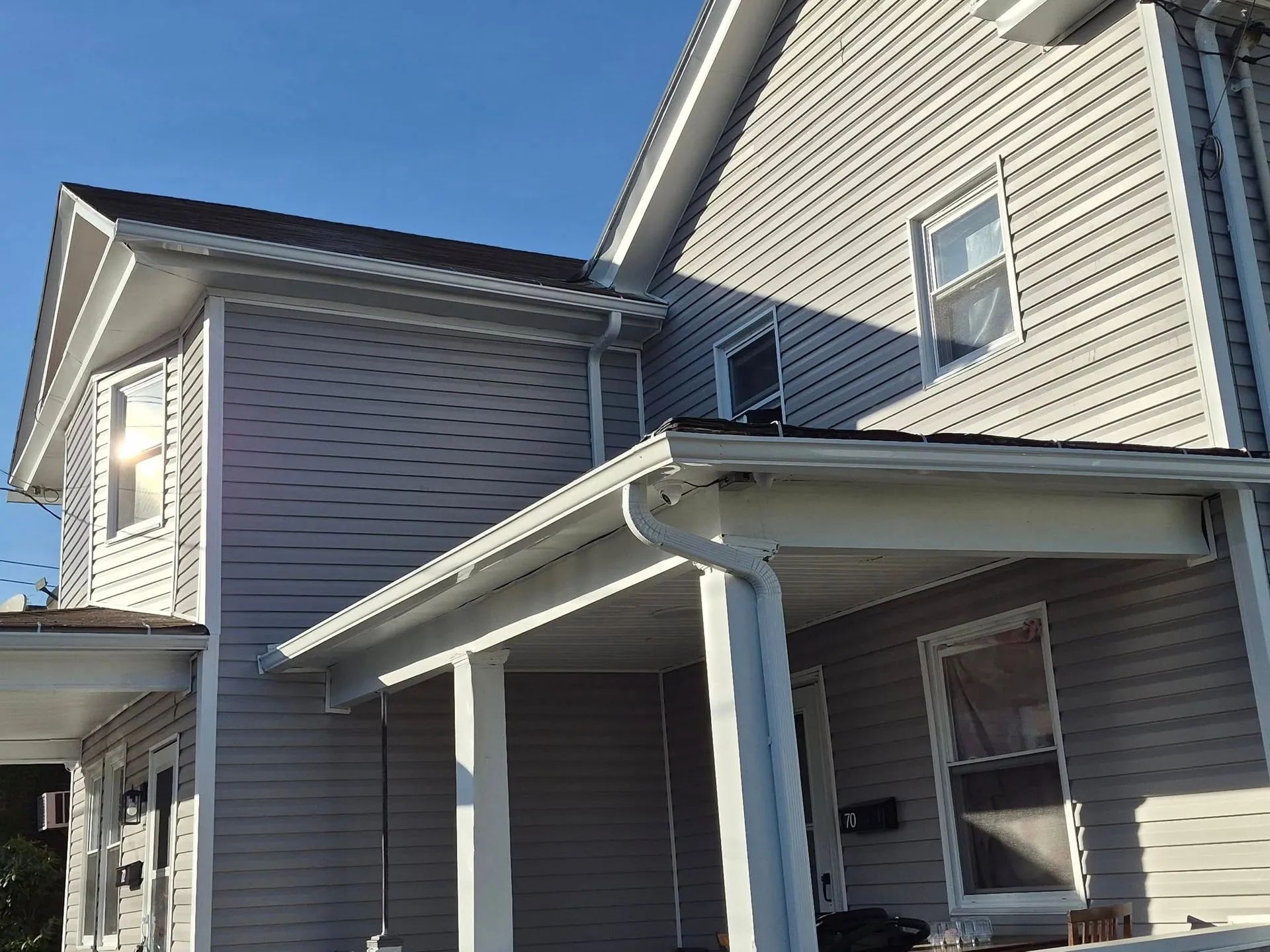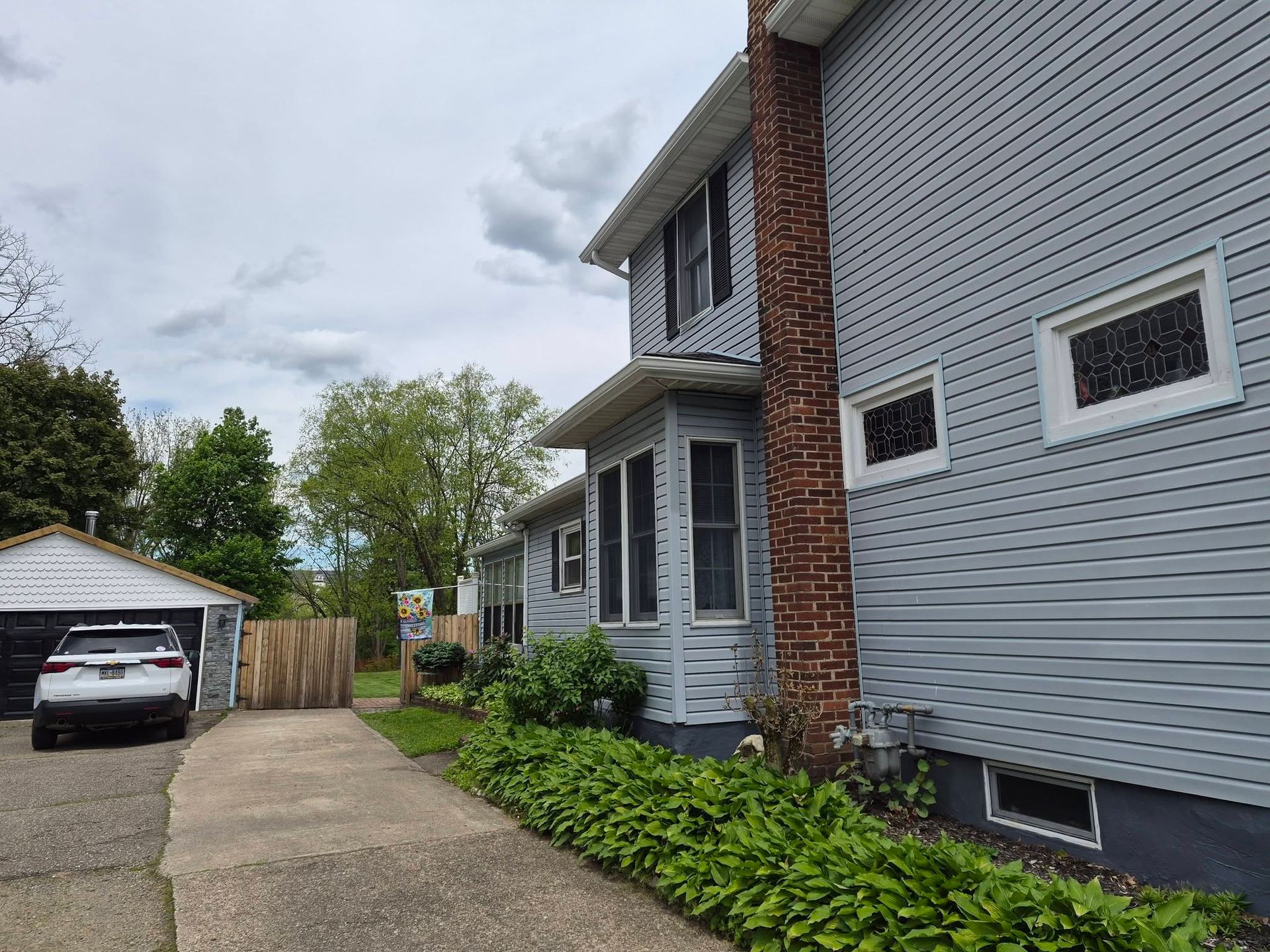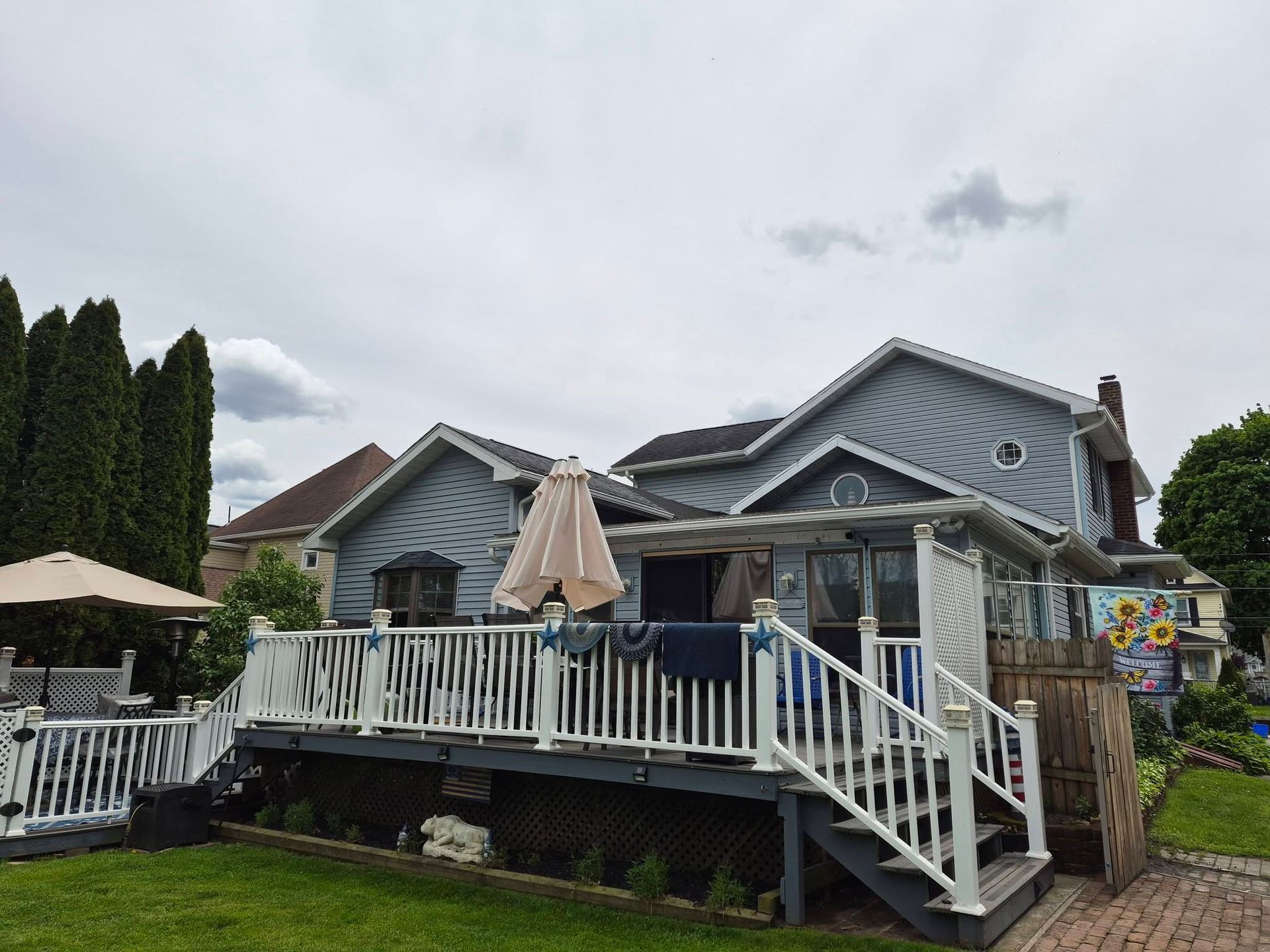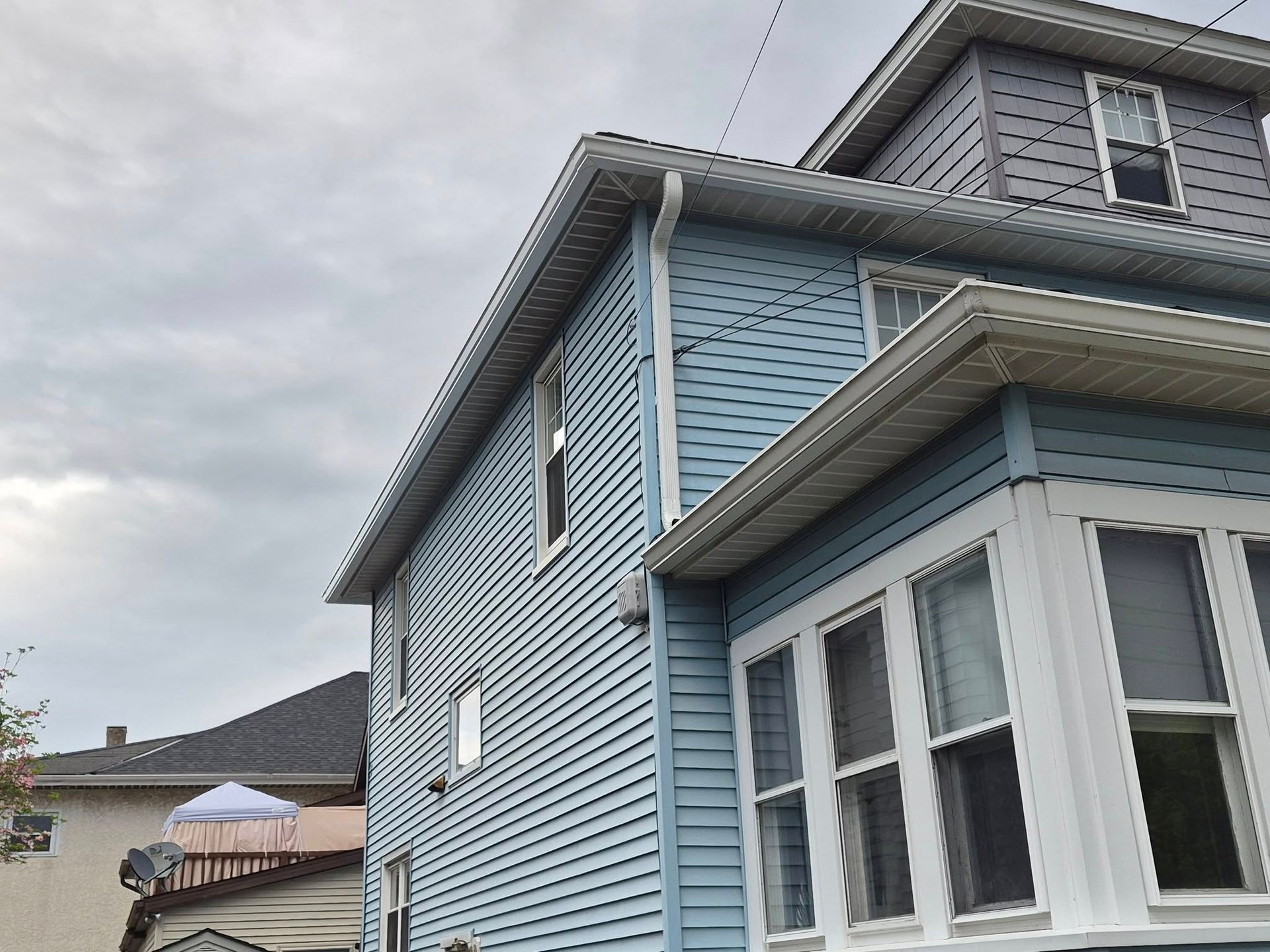
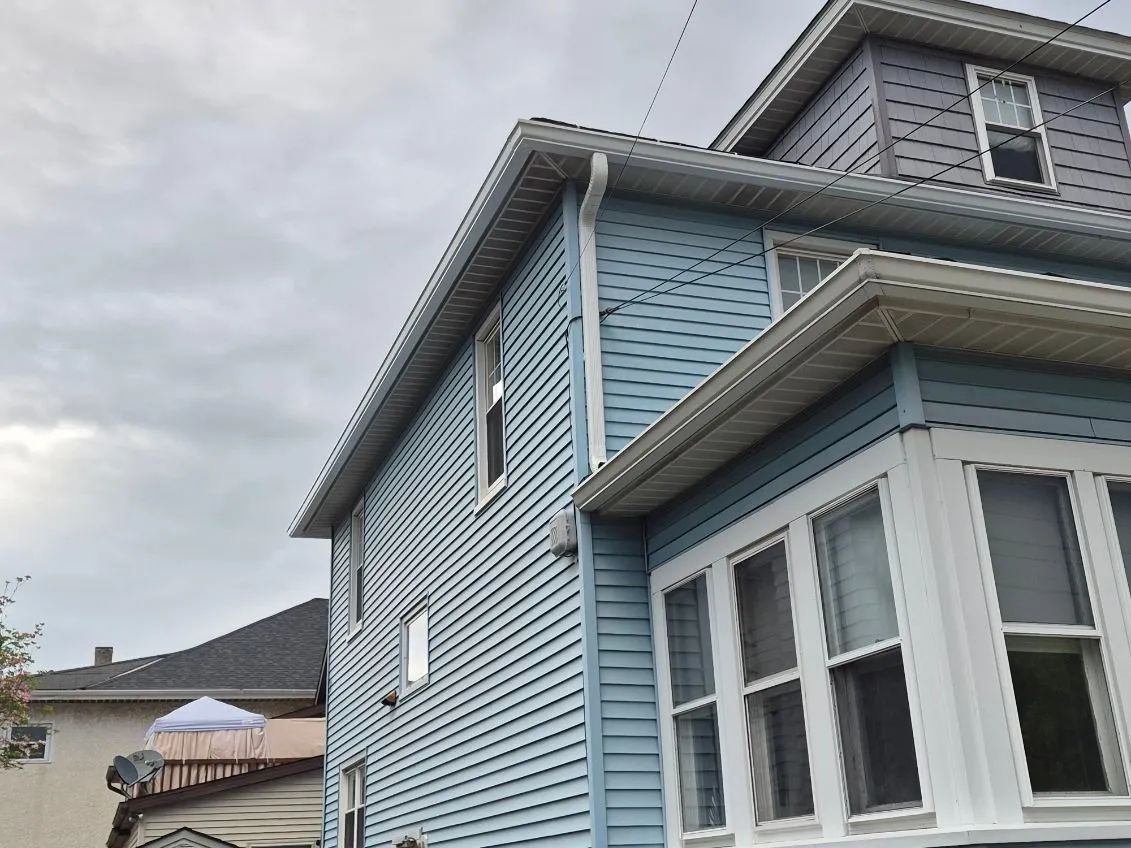
Why Gutter Size Matters More Than Homeowners Think
Quick Answer:
Most homes in the Wyoming Valley do fine with standard 5-inch K-style gutters, but steep rooflines, large roof planes, and heavy tree cover often call for 6-inch gutters and larger downspouts to keep up with the volume of water moving off the roof during a hard rain or a fast spring thaw.
Picking a gutter size sounds like a small decision until the first big storm rolls through and water starts spilling over the front edge instead of running down the downspout where it belongs. Size is one of the most overlooked parts of a gutter system, and it's also one of the easiest things to get wrong if you're just matching what was already on the house rather than sizing the system to the roof itself.
Why Gutter Size Actually Matters
A gutter system is a drainage system first and a trim detail second. Its job is to catch every drop of water that comes off the roof and move it to a downspout before it can pool, splash back onto siding, or run down toward the foundation. When a gutter is too small for the roof feeding it, water builds up faster than the channel and downspouts can carry it away, so it overflows the front lip during heavy rain instead of draining like it should.
That overflow doesn't just look bad. Water sheeting over the front of an undersized gutter lands right at the foundation line, saturates flower beds and mulch, and can find its way into a basement or crawlspace over time. Oversized systems aren't usually a problem in the same way, but they add unnecessary cost and visual bulk to a home that never needed the extra capacity in the first place. The goal is a system matched to the actual water load your roof produces.
The Two Standard Sizes: 5-Inch and 6-Inch
Seamless aluminum gutters in this region typically come in two working sizes.
5-Inch K-Style
This is the standard size on most residential homes with moderate roof planes and typical pitch. A 5-inch K-style gutter can handle the water coming off an average single-story or two-story home without much trouble, assuming the downspouts are sized and spaced correctly. It's the size you'll see most often on ranch-style homes, colonials, and standard-pitched roofs throughout Dupont, Avoca, and the surrounding boroughs.
6-Inch K-Style
A 6-inch gutter holds roughly 40 percent more water than a 5-inch gutter of the same style, which makes a real difference on homes with steep rooflines, large unbroken roof planes, or multiple rooflines that funnel water into one section of gutter. Homes with a story-and-a-half or full two-story roof pitched steeply toward one side often move water fast enough that a 5-inch channel simply can't keep pace during a downpour, even if it looks fine on a dry day.
But half-round gutters still show up on older or historic-style homes, where the rounded profile matches the architecture. K-style remains the standard for new seamless installs, though, because it holds more water per inch of gutter and handles debris better than a rounded trough.
How Roof Size and Pitch Change the Math
Square footage gets blamed for a lot of sizing decisions it doesn't actually control. Two homes with the exact same floor plan can need completely different gutter sizes depending on roof geometry. A low-pitched roof spreads rainfall out over more time as it sheds, while a steep pitch sends water off the edge fast and hard, concentrating a large volume into a short window. Pitch matters as much as total roof area, sometimes more, when a contractor is sizing a system.
Roof planes that funnel into a single valley or a shared gutter run also concentrate more water into less linear footage of gutter. A long, simple roofline might do fine with 5-inch gutters end to end, while a roof with several valleys draining into one corner may need 6-inch gutters and an extra downspout just in that section, even though the rest of the house is sized standard.
TIP: Walk your roofline after a heavy rain and watch where water concentrates. Corners where two rooflines meet, and any spot where you can see a heavier sheet of water coming off the edge, are the areas most likely to need upsized gutters or an added downspout, even if the rest of the house is fine with standard sizing.
Why Local Weather Changes the Equation
Homes in the Wyoming Valley deal with a wider range of water volume than a lot of regions. Heavy snow load sits on the roof through the winter months, autumn brings a steady drop of leaves from mature trees that can clog a channel fast, and the freeze-thaw cycle common to Northeastern Pennsylvania means gutters take on ice, then meltwater, then more ice, sometimes in the same week. A gutter that's borderline too small in summer can turn into a real problem once snow starts sliding off the roof in a sudden thaw and overwhelms a channel that was already running close to capacity.
Ice dams add another layer to this. When snow melts near the warmer upper roof and refreezes at the colder eave, it can back water up under shingles and stress the gutter hangers holding the system to the fascia. A properly sized system with solid attachment points handles this better than an undersized one already fighting to keep up with normal rainfall.
Downspouts: The Other Half of the Sizing Equation
Gutter channel size gets most of the attention, but downspouts do the actual work of getting water off the roof and away from the house. A 5-inch gutter typically pairs with a 2-by-3-inch downspout, while a 6-inch gutter calls for a 3-by-4-inch downspout to keep pace with the larger channel feeding it. Undersizing the downspout while upsizing the gutter defeats the purpose, since water will still back up at the outlet even if the horizontal run can hold more.
Spacing matters just as much as size. A general rule of thumb is one downspout for every 30 to 40 feet of gutter run, though roof pitch, valleys, and total roof area can shift that number in either direction. Homes with steep pitches or large roof sections often need downspouts spaced closer together than that guideline suggests, simply because more water is moving through less linear footage of gutter.
Signs Your Current Gutters Are the Wrong Size
A few signs tend to show up on a home whose gutters are undersized for the roof feeding them. Water spills over the front lip during moderate rain, not just the worst storms of the year. Downspouts run at full force while water still backs up at the top, the same way a sink drain struggles when the faucet's open all the way. Staining or erosion shows up at the foundation line directly below a section of gutter even when that gutter looks fine up close. Ice tends to pile up heaviest in the exact spots where overflow happens come summer, and fascia boards near the attachment points start showing water stains or soft spots, a sign that runoff has been sneaking down the house instead of through the downspout.
Seeing more than one of these on the same stretch of house? That's usually a sizing problem, not a debris or slope issue, especially if the gutters get cleaned on schedule and still spill over anyway.
WARNING: Don't assume a larger downspout alone will fix an overflow problem if the gutter channel itself is undersized for the roof. Swapping downspouts without addressing channel capacity just moves the bottleneck instead of solving it, and you can end up spending on a fix that doesn't actually stop the overflow.
Seamless Installation and Why Fit Matters More Than Ever
Seamless gutters are formed on site to match the exact length of each roofline, which removes the seams that traditional sectional gutters rely on every ten feet or so. Fewer seams means fewer leak points and a cleaner look, but it also means the initial sizing decision carries more weight, since a seamless run is custom-fabricated to the house rather than assembled from stock pieces. Getting the size right at installation avoids a situation where an entire seamless run has to be replaced later because it was undersized from the start.
A correctly sized seamless system, with hangers spaced for the local snow load and downspouts matched to the channel, tends to handle a wider range of conditions with less maintenance than a mismatched or aging system that was never sized for the roof it's protecting.
Good gutters only protect your foundation while they stay clear and properly aligned. A simple rhythm keeps them doing their job.
Every few months, clear leaves and debris from the troughs and check that downspouts run free. Twice a year, in late spring and again in fall, inspect for sagging sections, loose fasteners, and any spot where water stains hint at overflow. Before winter, make sure downspout extensions are still carrying water well away from the house, because a clogged or short downspout in freezing weather turns into an ice problem fast. Once a year, watch the gutters during a real rain and confirm water is flowing to the downspouts rather than spilling over the edge.
Frequently Asked Questions
Do I need 6 inch gutters just because my house is large?
Not necessarily. Square footage alone does not decide sizing. Roof pitch, how many planes drain into one area, and where water concentrates matter more. Large homes with gentle, broken rooflines often handle 5 inch gutters.
Can I mix gutter sizes on the same house?
Yes, and it happens often. One section with a steep valley or large unbroken plane may get 6 inch gutters while the rest runs 5 inch. Sizing always follows the actual water load, not uniformity.
Will bigger gutters solve a clogging problem?
Not on their own. Clogging comes from debris load off nearby trees rather than channel size. A larger gutter holds more water before overflowing, but leaves still need regular cleaning or a suitable guard system.
How often should gutter sizing be reevaluated?
Anytime a roof replacement, an addition, or a noticeable change in nearby tree cover happens. Replacements can alter pitch or add valleys, and maturing trees drop far more debris than they did several years ago.
Does gutter guard installation change what size I need?
Guards manage debris rather than capacity, so sizing still depends on roof geometry and local rainfall. A well sized system with guards performs better than an undersized one, since guards do not add channel capacity.
Trust Valley Gutter Pros For Correct Gutter Sizing
Getting gutter size right takes more than a quick look at the existing system. We measure roof pitch, count valleys, and study where water concentrates before recommending a channel width or downspout pairing. With 5+ years serving homeowners across the region, we have seen what happens when a system is sized by habit rather than by the roof it protects, and we build every installation around that difference. That approach keeps water moving away from your foundation through every season.
Homeowners in Pittston, Pennsylvania rely on us for
seamless gutters
formed on site and fitted to each roofline exactly. If your gutters overflow during ordinary rain, pull away from the fascia, or you are planning a roof project and want the drainage sized correctly from the start, reach out to Valley Gutter Pros. We will walk your roofline, explain what we find in plain terms, and recommend the system your home actually needs. Then we install it the right way.