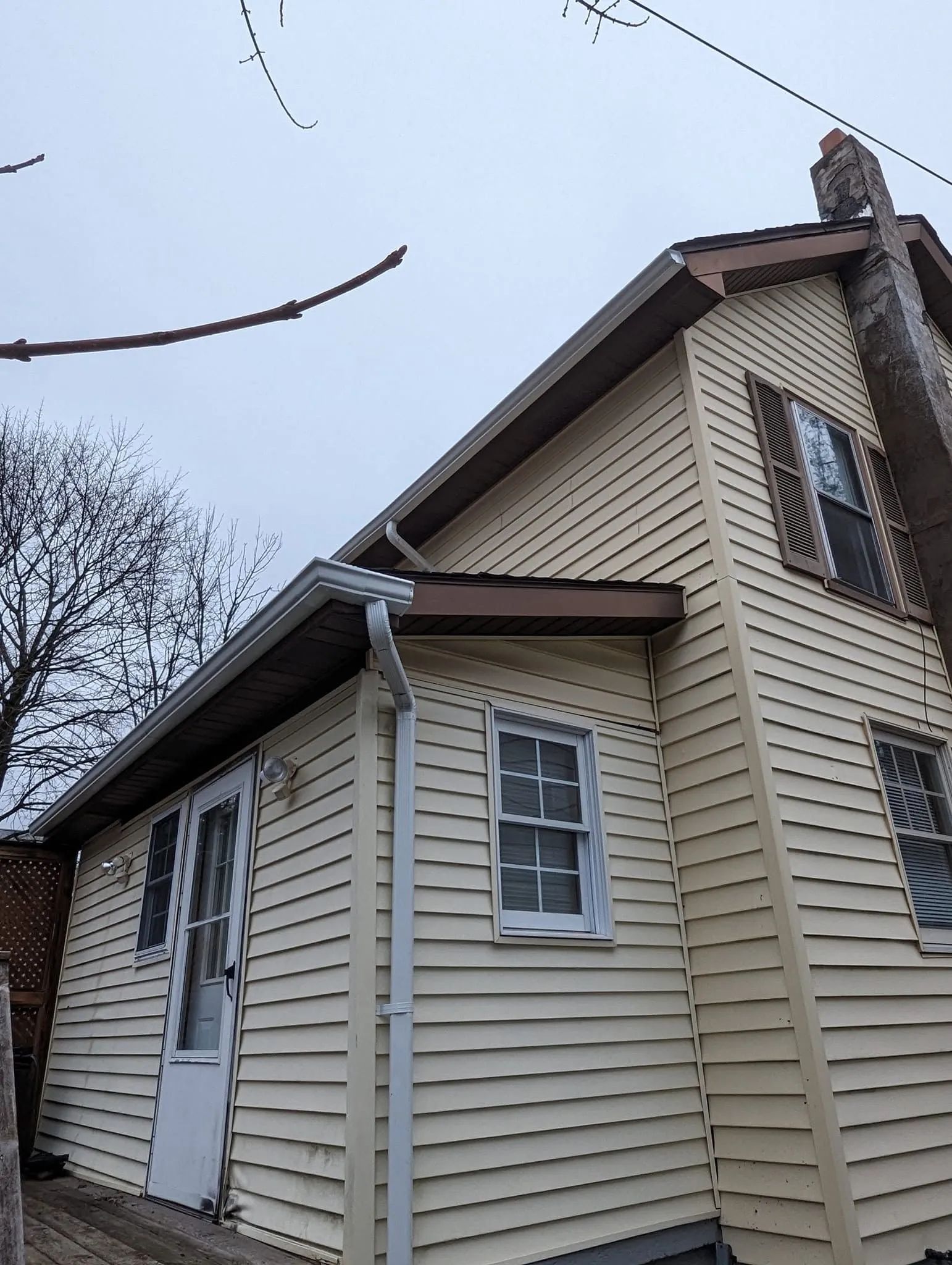

How New Gutters Protect Your Home Foundation From Water Damage

June 25, 2026

You walk down to the basement after two days of steady rain and catch it before you see it: that flat, mineral smell of damp concrete. Maybe there is a thin dark line creeping up the bottom of the wall, or a patch of efflorescence you swear was not there last spring. It feels like a basement problem. It almost never starts there.


The truth most people miss is that water in the basement usually begins at the roofline. When rain sheets off your roof with nowhere controlled to go, it lands in a tight band of soil right against your foundation and soaks straight down. New, properly pitched gutters are the single most effective thing standing between that runoff and your foundation. After enough years inspecting wet basements and cracked footings, the pattern is hard to miss: solve the water at the top of the house and most of the trouble below it quietly disappears.

Your Gutters Are Your Foundation's First Line Of Defense

Your foundation is built to carry weight, not to sit in saturated soil. A roof of average size can shed hundreds of gallons during a single heavy storm. Without gutters, all of that water concentrates in the few feet of ground hugging your walls.


That concentrated soaking is what does the damage. Wet soil swells and presses inward against the foundation, a force called hydrostatic pressure. Dry soil shrinks and pulls away. When the same ground swells and contracts over and over, footings shift, hairline cracks widen, and water finds the path of least resistance through the wall. Gutters break that cycle by collecting roof water and routing it through downspouts to a controlled discharge point, keeping the soil around your home stable instead of soaked.

What Happens To Soil And Concrete When Water Has Nowhere To Go

Failed or missing gutters cause damage in a predictable sequence, and recognizing it early saves you the worst of it.


First, water erodes the soil at the drip line, carving shallow trenches that funnel even more water toward the wall. Next, that saturated soil loses its load bearing strength, and sections of the foundation begin to settle unevenly. Then comes the interior evidence: damp walls, peeling paint, white chalky mineral deposits, and eventually visible cracks. In our region the problem compounds in winter, when waterlogged soil freezes, expands, and presses against concrete with real force before thawing and starting over.


Most people notice the last stage first and assume the foundation is failing on its own. In the field, the original culprit is almost always drainage that let water collect where it never should have.

The Warning Signs Worth Catching Early

A few signals tell you water is already reaching your foundation. Catch any of these and treat your gutters as the first suspect.


Look for soil that has washed away or pooled near the base of the house after rain. Check for downspouts that empty within a foot of the wall, basement walls that feel cool and damp to the touch, doors or windows that suddenly stick, and stair step cracks in block or brick. A musty smell that lingers even on dry days usually means moisture is wicking through the foundation continuously, not just during storms.

TIP: Walk your perimeter during the next heavy rain and watch where the water actually goes. If it sheets off the roof edge in a curtain or splashes back against the wall, your gutters are either missing, undersized, or pitched wrong, and that is the fix that protects everything below.

WARNING: If you see horizontal cracking or a foundation wall that bows inward, stop and call a professional before doing anything else. That pattern means soil pressure has reached a structural threshold, and clearing gutters alone will not relieve it safely.

How Proper Gutters Change The Outcome

New gutters protect your foundation by doing one thing extremely well: removing water from the equation before it ever touches the ground near your walls. Seamless gutters fabricated to your exact rooflines eliminate the joints where leaks and overflow usually start, and correct pitch keeps water moving toward the downspouts instead of pooling and spilling over the front edge.


The downspout placement matters as much as the gutter itself. We aim to discharge water at least four to six feet from the foundation, farther on sloped lots, using extensions or buried drains so runoff never circles back. Sized correctly for your roof area, a good system handles the heaviest downpours without overshooting, which is the failure point we see most on older or undersized gutters.

Why Our Regional Weather Raises The Stakes

Drainage matters everywhere, but the climate here makes it unforgiving. Our winters deliver repeated freeze thaw cycles, where snow melts during the day, refreezes overnight, and works that moisture deeper into the soil and into any existing crack. Water expands as it freezes, so every cycle pries a little harder at the foundation.


Spring brings its own pressure. Heavy snowmelt combined with steady rain saturates ground that is already holding winter moisture, and on the hillier lots common around here, that water moves downhill straight toward foundations. The heavy clay content in much of our local soil drains slowly and swells noticeably when wet, which means standing water lingers and pushes against walls longer than it would in sandier ground. Gutters built and pitched for these conditions, not for a milder average, are what hold up across the seasons.

Keeping Your New Gutters Working Year After Year

Good gutters only protect your foundation while they stay clear and properly aligned. A simple rhythm keeps them doing their job.


Every few months, clear leaves and debris from the troughs and check that downspouts run free. Twice a year, in late spring and again in fall, inspect for sagging sections, loose fasteners, and any spot where water stains hint at overflow. Before winter, make sure downspout extensions are still carrying water well away from the house, because a clogged or short downspout in freezing weather turns into an ice problem fast. Once a year, watch the gutters during a real rain and confirm water is flowing to the downspouts rather than spilling over the edge.

Mistakes That Quietly Undo Good Drainage

The most common mistake is treating gutters as decoration rather than drainage, so cleaning gets postponed until a clog has already sent water over the side for months. By then the soil damage is done.


Another frequent one is letting downspouts empty right at the foundation because the extension looked unsightly or got knocked loose. It feels minor, but it concentrates the entire roof's runoff in the worst possible spot. People also tend to slope the surrounding soil toward the house when landscaping, which sends graded water back where the gutters worked to remove it. Each of these is an easy habit to fall into, and each one reopens the exact path to the foundation that good gutters are meant to close.

Frequently Asked Questions

Good gutters only protect your foundation while they stay clear and properly aligned. A simple rhythm keeps them doing their job.


Every few months, clear leaves and debris from the troughs and check that downspouts run free. Twice a year, in late spring and again in fall, inspect for sagging sections, loose fasteners, and any spot where water stains hint at overflow. Before winter, make sure downspout extensions are still carrying water well away from the house, because a clogged or short downspout in freezing weather turns into an ice problem fast. Once a year, watch the gutters during a real rain and confirm water is flowing to the downspouts rather than spilling over the edge.

  • Will new gutters alone stop my basement from leaking?

    New gutters move roof water away from your foundation, which solves most perimeter moisture problems. If leaking continues, the cause may involve grading or interior drainage. Start with gutters, then reassess. Extended downspouts handle the large majority of cases we see.

  • How far should downspouts carry water from the house?

    Aim to discharge water at least four to six feet from the foundation, farther on sloped lots. Short extensions dump runoff right back against the wall, where it saturates soil and seeps inward. Longer extensions or buried drains work much better.

  • Do gutters really matter in winter?

    Yes. Winter is when gutters earn their keep here. Snowmelt and freeze thaw cycles push water into soil that then expands against the foundation. Clear, properly pitched gutters move that meltwater away before it pools, freezes, and pries at concrete.

  • Should I clean my own gutters or call someone?

    Ground level checks and downspout clearing are fine to handle yourself. Once you need a ladder on uneven or sloped ground, the fall risk is real. If your roof is steep, multiple stories, or icy, stop and let us handle it safely.

  • How long does a full gutter replacement take?

    Most homes are measured, fabricated, and installed within a single day, sometimes two for larger or multilevel roofs. Seamless gutters are formed on site to fit your exact rooflines, so there is little waiting. Weather can shift timing, but the work moves quickly.

Protect Your Foundation Before The Next Storm

The principle is simple: control the water at the roofline and you protect everything beneath it. That work is harder here than in most places, because our freeze thaw winters, clay heavy soil, and hilly spring runoff give water more chances to reach your foundation and more force when it gets there. At Valley Gutter Pros, we install and maintain seamless gutter systems built for these exact conditions, with more than 5 years protecting homes across Pittston, Pennsylvania and the surrounding communities. If your gutters are aging, overflowing, or pulling away from the house, reach out and let us take a look before the next heavy rain finds your foundation.

Gray two-story house with brick chimney, driveway, detached garage, and green shrubs along the side.
November 21, 2025
Knowing when to call gutter professionals in Carbondale can save you from expensive water damage and structural problems. Call professionals when you notice overflowing gutters, visible damage, or if it's been more than a year since your last inspection.

Suburban house with gray siding, black shutters, flower beds, and a cloudy sky
November 7, 2025
When you need gutter repairs in Pittston, you can expect professional contractors to assess the damage, explain necessary repairs, and provide solutions that handle Pennsylvania's weather challenges.

Two-story white house with a front porch, striped awning, and brick chimney on a cloudy day
October 24, 2025
Finding reliable gutter installers in Dunmore means looking for contractors who understand Pennsylvania's weather patterns and have experience working with local building codes.

Backyard deck with white railing, patio umbrellas, and a blue-gray house under a cloudy sky
October 10, 2025
When choosing gutter contractors in Avoca, you want someone who understands Pennsylvania's harsh winters and heavy rainfall patterns. Look for contractors with local experience, proper licensing, and a track record of quality work in the area.

Light blue house exterior with white trim under a cloudy sky
October 10, 2025
Finding quality gutter cleanouts in Scranton starts with understanding that proper maintenance prevents water damage and foundation problems.

Gray two-story house with black shutters, striped awning, and porch on a cloudy day
October 10, 2025
Gutter guards in Wilkes-Barre help homeowners reduce maintenance while protecting their homes from water damage. These systems keep debris out while allowing water to flow freely, which is especially important in Pennsylvania's leaf-heavy environment.